Proximity Sensor Frequently Asked Questions
1. What is a proximity sensor?
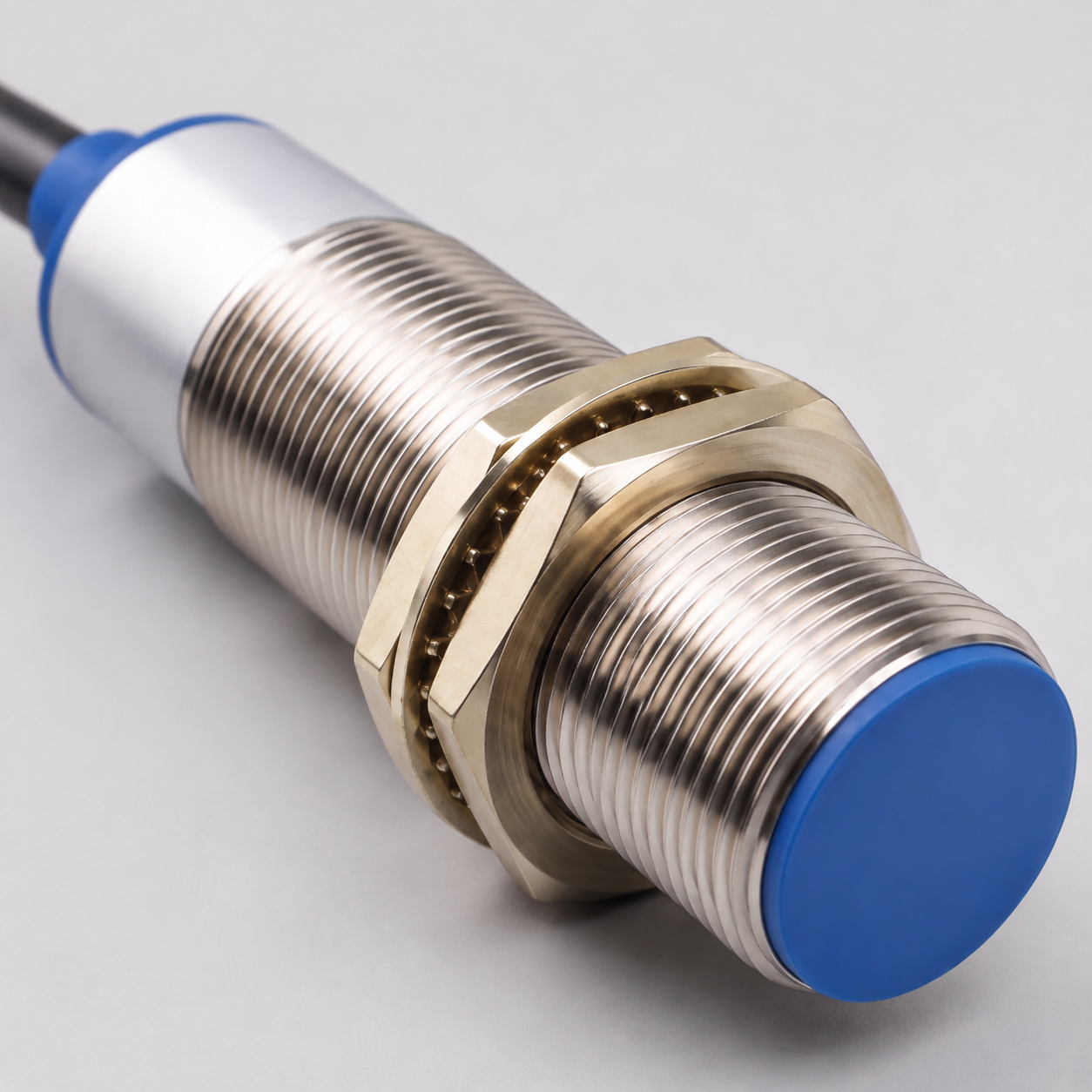
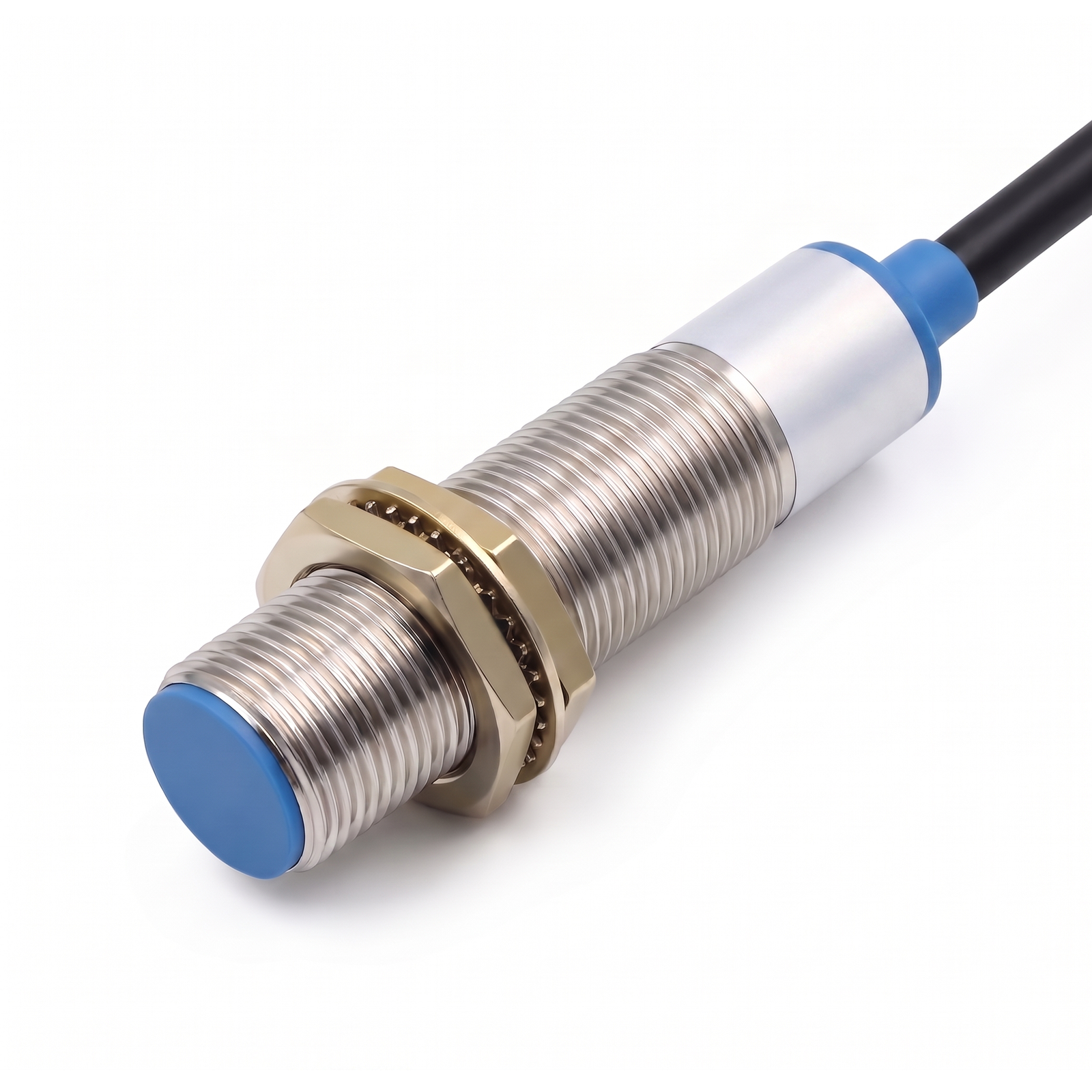
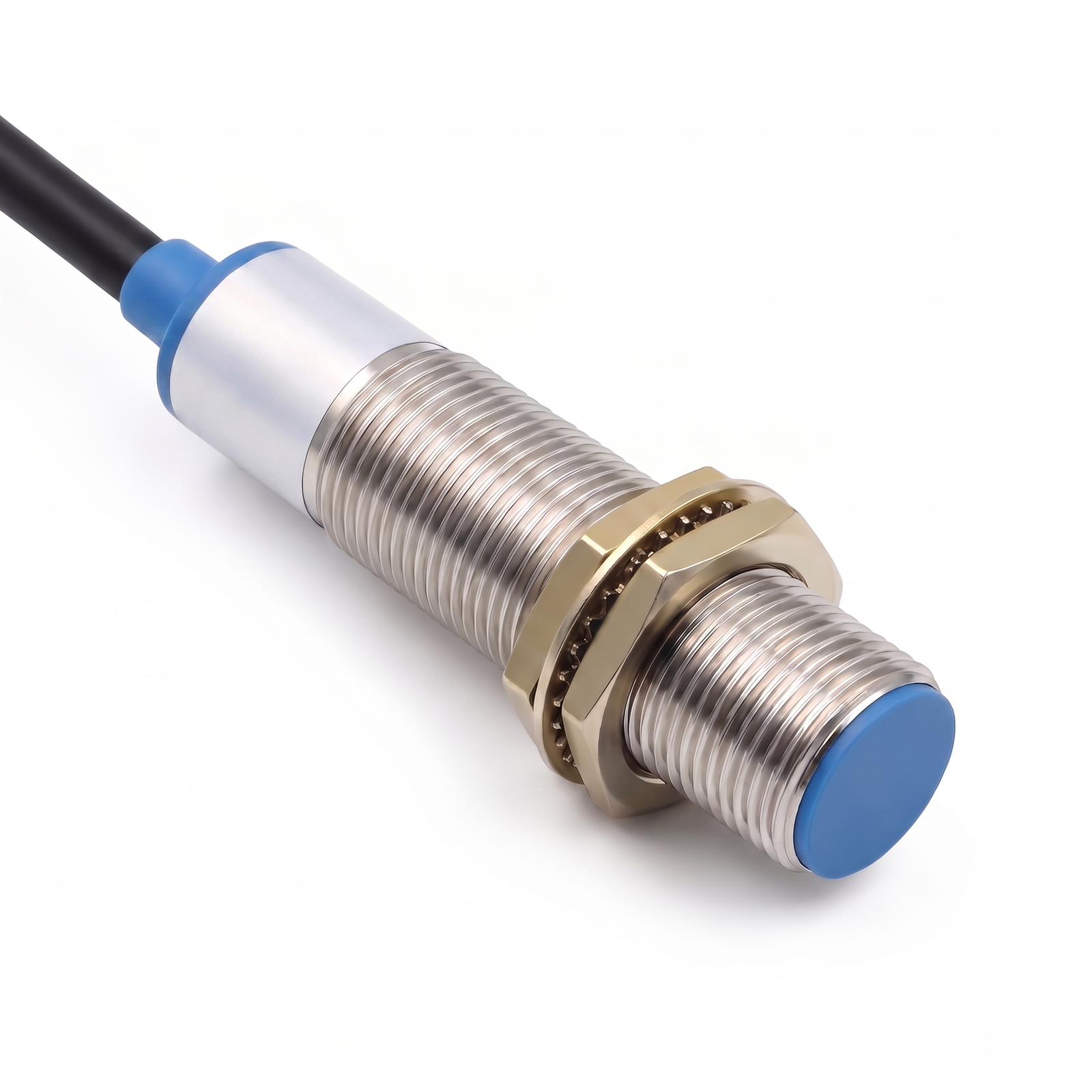
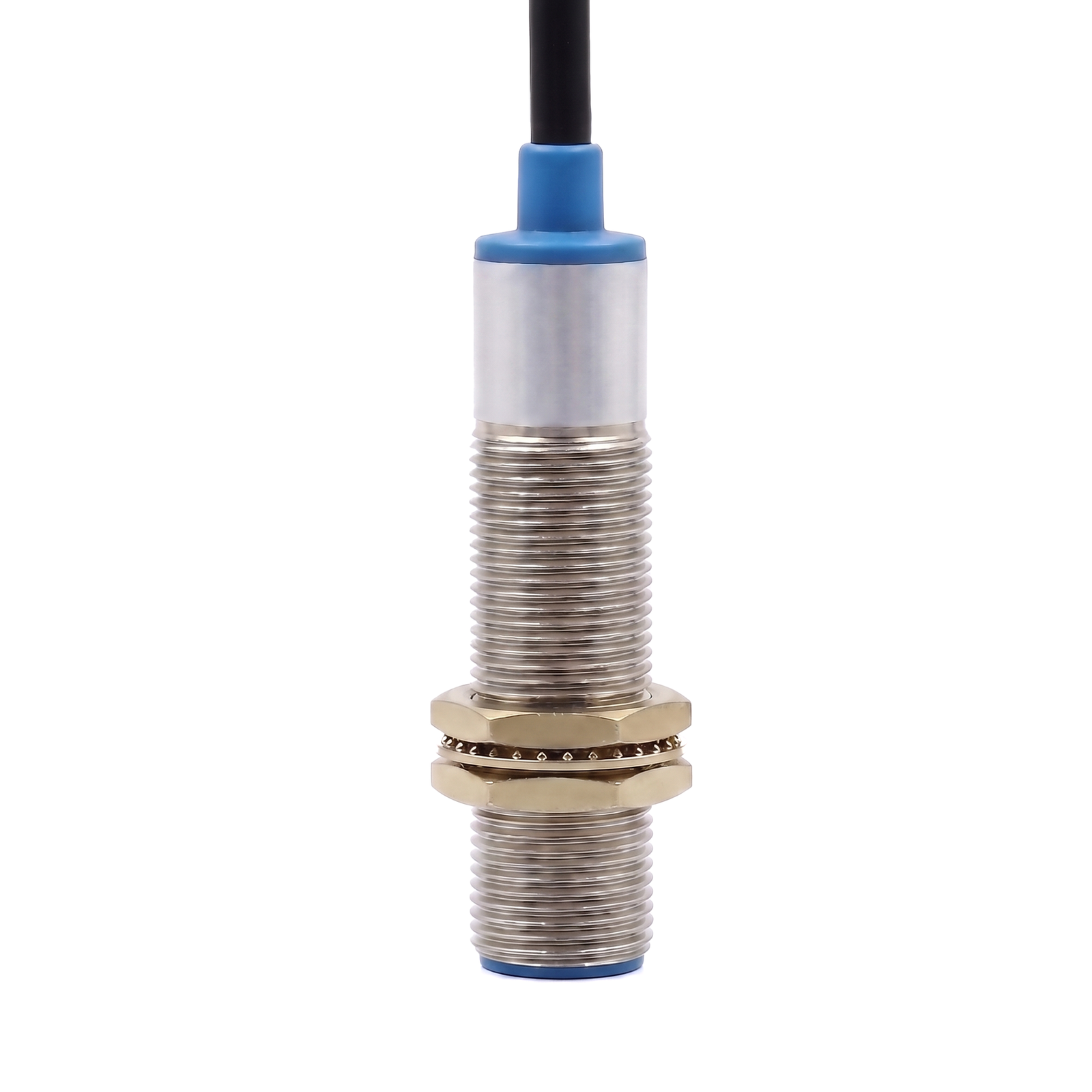
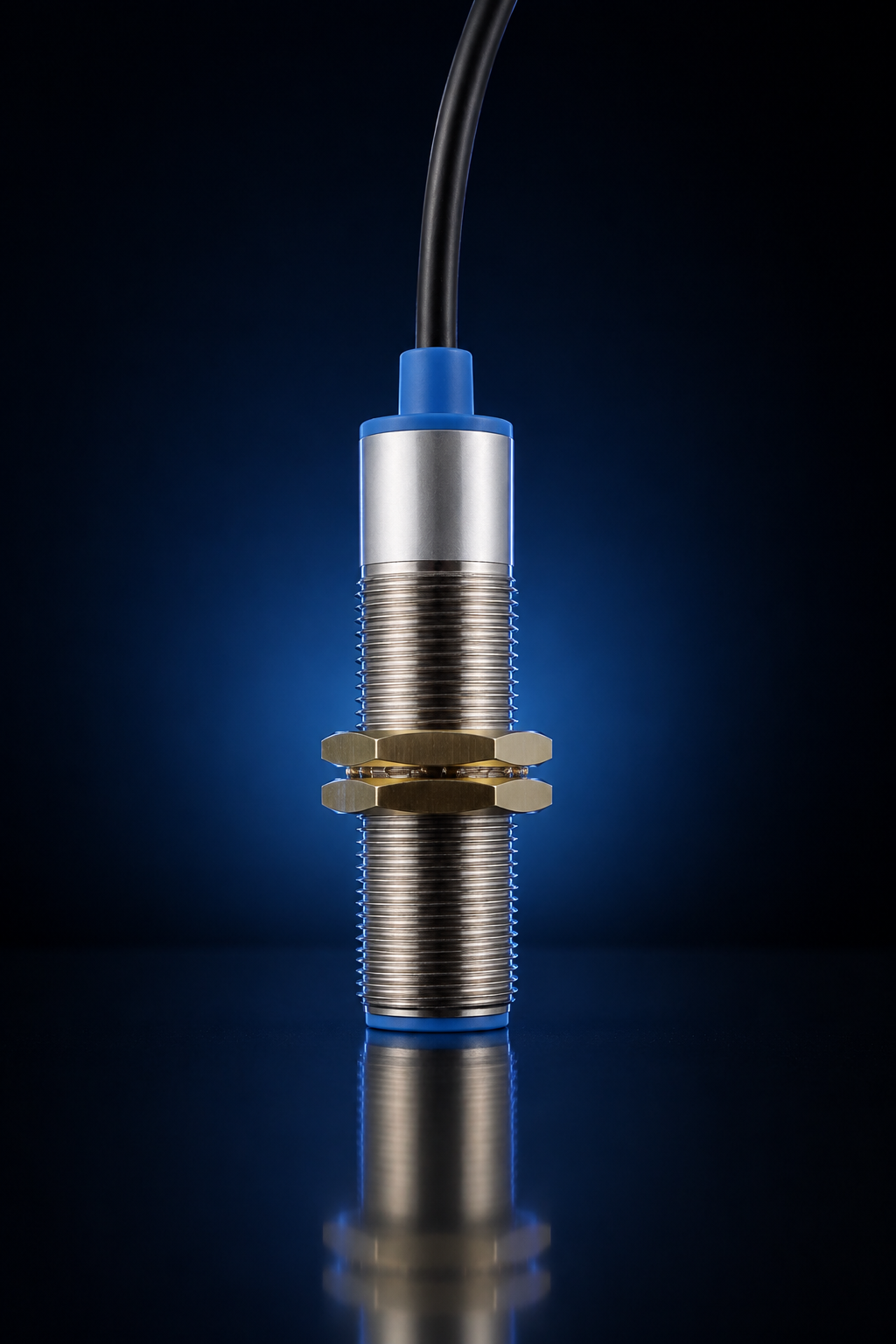
A proximity sensor is an electronic device that detects the presence, position, or movement of an object without making physical contact. It is commonly used in industrial automation, manufacturing equipment, conveyor systems, CNC machines, robotics, and automotive applications.
2. What types of proximity sensors are available?
Available options include:
- Inductive proximity sensors
- Capacitive proximity sensors
- M8, M12, M18, and M30 cylindrical sensors
- Rectangular and flat-profile sensors
- Standard and long-distance sensors
- Pre-wired and connector-type sensors
- Metal and ABS plastic housing options
Availability and specifications vary by model.
3. What is the difference between inductive and capacitive sensors?
An inductive proximity sensor detects compatible metal objects without physical contact. It is commonly used to detect steel parts, machinery components, fasteners, gears, shafts, and tooling.
A capacitive proximity sensor can detect selected metallic and non-metallic materials, including plastic, glass, wood, water, paper, powder, and granular products. Detection capability depends on the sensor model, target material, and calibration.
4. What materials can the sensor detect?
Inductive models are intended primarily for compatible metal targets. Capacitive models may detect metals and selected non-metallic materials such as plastic, wood, glass, water, powder, paper, and stone.
The target material must be confirmed before choosing a sensor.
5. What detection distances are available?
Standard models offer sensing distances of approximately 1.5 mm to 15 mm. Selected extended-range models may provide detection distances of up to 27 mm.
Actual sensing distance can vary according to the model, target size, target material, alignment, mounting method, and surrounding environment.
6. What do M8, M12, M18, and M30 mean?
These measurements indicate the approximate diameter and thread size of a cylindrical sensor body:
- M8: Compact installations and limited spaces
- M12: Small machinery and automation equipment
- M18: Common general-purpose industrial applications
- M30: Larger sensing surfaces and longer detection ranges
The correct size depends on the available mounting space and required sensing distance.
7. What is the difference between NPN and PNP outputs?
NPN and PNP describe how the sensor switches its electrical output.
- NPN: The output switches toward the negative or ground side.
- PNP: The output switches toward the positive supply side.
The correct option depends on the PLC, controller, relay, or automation system being used. Check the equipment wiring requirements before ordering.
8. What wiring configurations are available?
Depending on the model, available configurations may include:
- DC 3-wire
- DC 2-wire
- AC 2-wire
- Pre-wired cable
- Detachable connector
The wiring configuration must match the equipment’s electrical control system.
9. What voltage does the proximity sensor require?
Available voltage configurations may include:
- 12–24V DC
- 90–250V AC
- 24–240V AC/DC on selected wide-voltage models
Voltage ratings vary by model. Never connect a sensor before confirming its exact voltage and wiring specifications.
10. What is the difference between normally open and normally closed?
A normally open (NO) sensor keeps its switching output open until a compatible target is detected.
A normally closed (NC) sensor keeps its switching output closed until a compatible target is detected.
Select the switching function required by the control system and safety design.
11. Can this proximity sensor be connected to a PLC?
Yes. Compatible proximity sensors can be connected to PLCs, machine controllers, relays, and other industrial control equipment. The voltage, NPN or PNP output, wiring type, load requirements, and switching function must match the controller’s input specifications.
12. Is the sensor waterproof?
Selected models have an IP67 protection rating, providing protection against dust and temporary water exposure when correctly installed. IP67 does not mean the sensor is suitable for unlimited submersion, high-pressure washing, or every chemical environment.
Check the exact model rating before using the sensor around water, coolant, oil, or cleaning chemicals.
13. Can the sensor operate around oil, dust, and vibration?
Selected industrial models are designed for environments involving dust, oil mist, moisture, and machinery vibration. Performance depends on proper mounting and the environmental rating of the selected model.
Confirm compatibility with the specific oil, coolant, chemical, vibration level, and cleaning process before installation.
14. What do flush and non-flush mounting mean?
A flush-mount sensor can be installed with its sensing face level with the surrounding metal mounting surface.
A non-flush sensor normally requires additional clear space around the sensing face to prevent interference and maintain the specified sensing distance.
Always follow the installation requirements for the selected model.
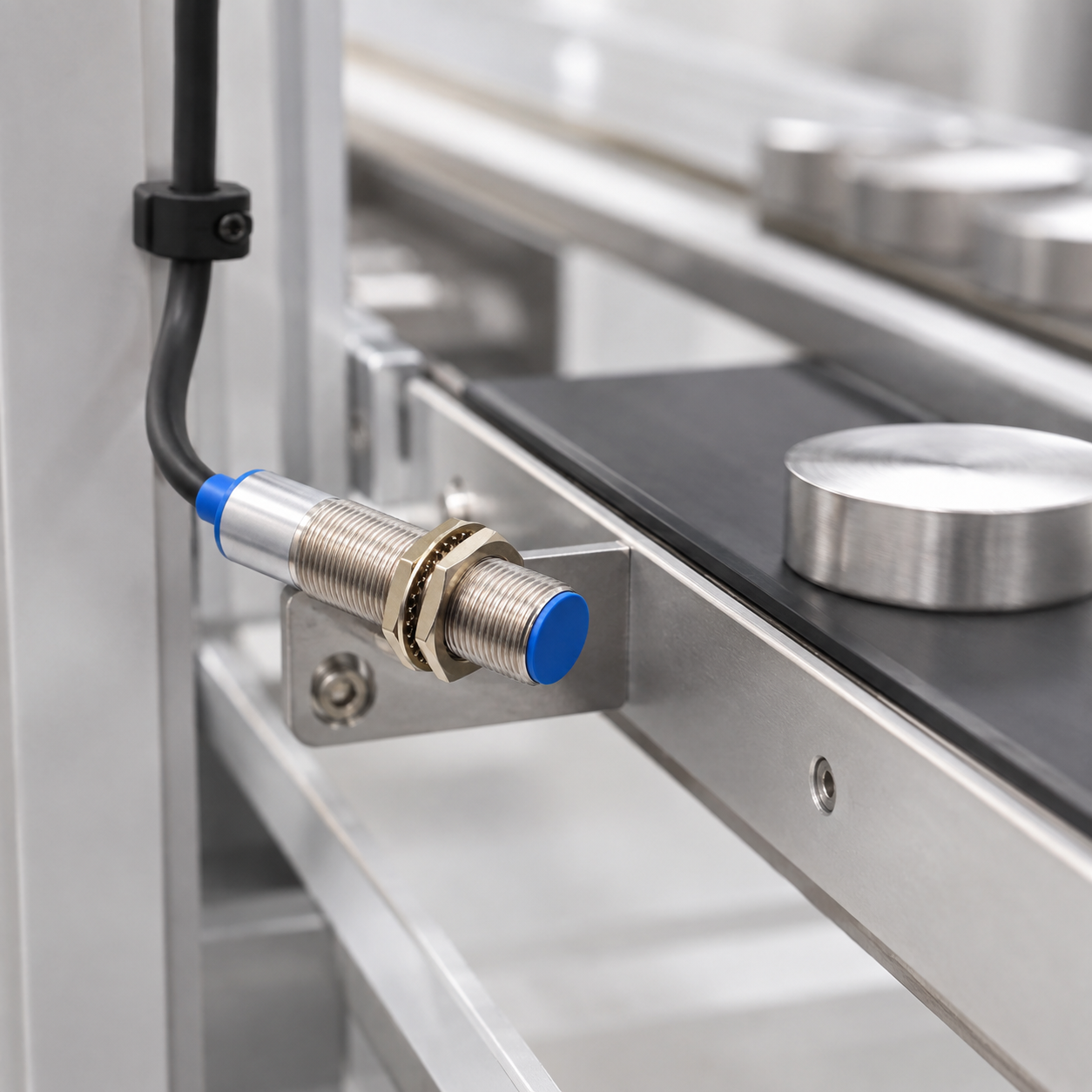
15. Can the sensor count objects on a conveyor?
Yes. Proximity sensors are commonly used to count compatible objects moving along a conveyor. The sensor’s response speed, detection distance, target material, installation position, and conveyor speed must be suitable for the application.
16. Can it be used on CNC machines?
Yes. Inductive proximity sensors are frequently used on CNC equipment for position confirmation, home-position sensing, limit detection, component verification, and metal-part detection.
The sensor should be protected from impact, excessive heat, chips, coolant, and electrical interference.
17. Can it be used in automotive applications?
Yes. These sensors may be used in automotive manufacturing systems, assembly equipment, inspection stations, robotic production cells, conveyors, and compatible vehicle-related machinery.
They should not be used as replacements for vehicle safety systems unless the exact sensor is specifically designed and certified for that purpose.
18. Does the sensor require physical contact with the target?
No. The sensor detects a compatible target without direct contact. This reduces mechanical wear and makes it suitable for repeated, high-cycle detection.
19. Does the sensor require regular maintenance?
Proximity sensors generally require minimal maintenance because they have no contacting detection mechanism. Periodically inspect the sensing face, cable, connector, mounting nuts, alignment, and surrounding area.
Remove buildup that could interfere with reliable detection.
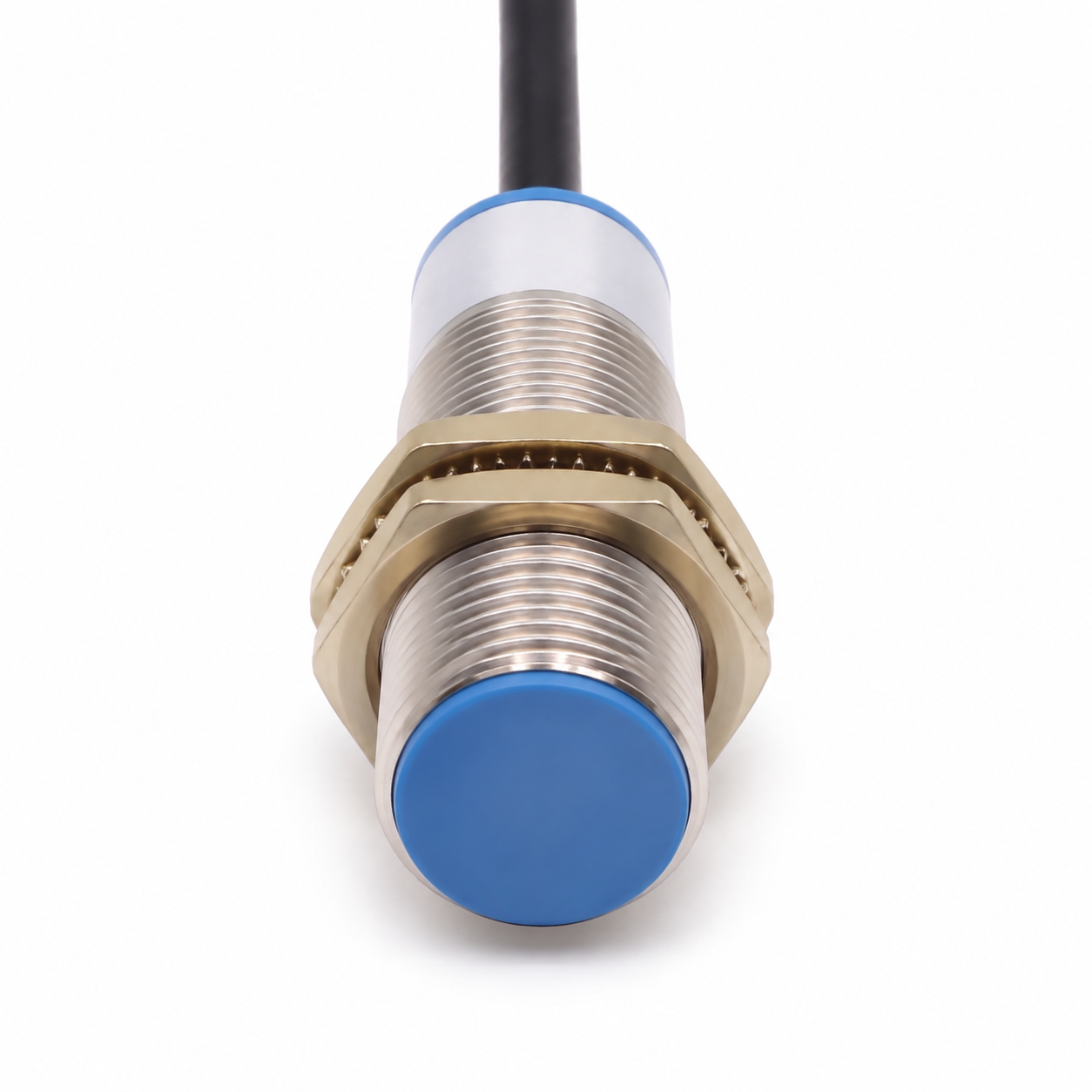
20. How is a cylindrical proximity sensor installed?
A threaded cylindrical model is normally placed through a compatible mounting hole or bracket and secured using the supplied locknuts. Adjust the sensing-face position and tighten the hardware without exceeding the manufacturer’s recommended torque.
Avoid bending or pulling the cable near the sensor body.
21. Why is the sensor not detecting the target?
Possible causes include:
- Incorrect sensor type for the target material
- Target located outside the sensing range
- Incorrect NPN or PNP output
- Incorrect operating voltage or wiring
- Target too small or improperly aligned
- Metal interference around a non-flush sensor
- Dirt or buildup on the sensing face
- Loose mounting or damaged cable
- Incorrect PLC or controller configuration
Disconnect power safely and check the applicable wiring diagram and model specifications before troubleshooting.
22. Can the detection distance be adjusted?
Some capacitive models may include sensitivity adjustment, while many inductive sensors have a fixed rated sensing distance. Adjustment capability depends on the exact model.
Moving the sensor or target mounting position can also help achieve the required operating distance.
23. Are electrical protection features included?
Selected models may include protection against short circuits, reverse polarity, electrical surges, and overcurrent conditions. Protection features vary by model and do not replace proper fusing, wiring, grounding, and system-level protection.
24. How do I select the correct proximity sensor?
Before ordering, confirm:
- Target material
- Required detection distance
- Sensor size and shape
- Flush or non-flush mounting
- NPN or PNP output
- Normally open or normally closed switching
- DC or AC wiring configuration
- Operating voltage
- Cable or connector type
- Environmental protection rating
- Available mounting space
- Required response speed
25. What should I confirm before purchasing?
Review the exact model number and manufacturer specifications before purchase. Detection distance, dimensions, operating voltage, wiring, output type, switching function, cable length, operating temperature, switching frequency, protection rating, and target compatibility can vary between models.