FREQUENTLY ASKED QUESTIONS
What is the ST-COW(B)?
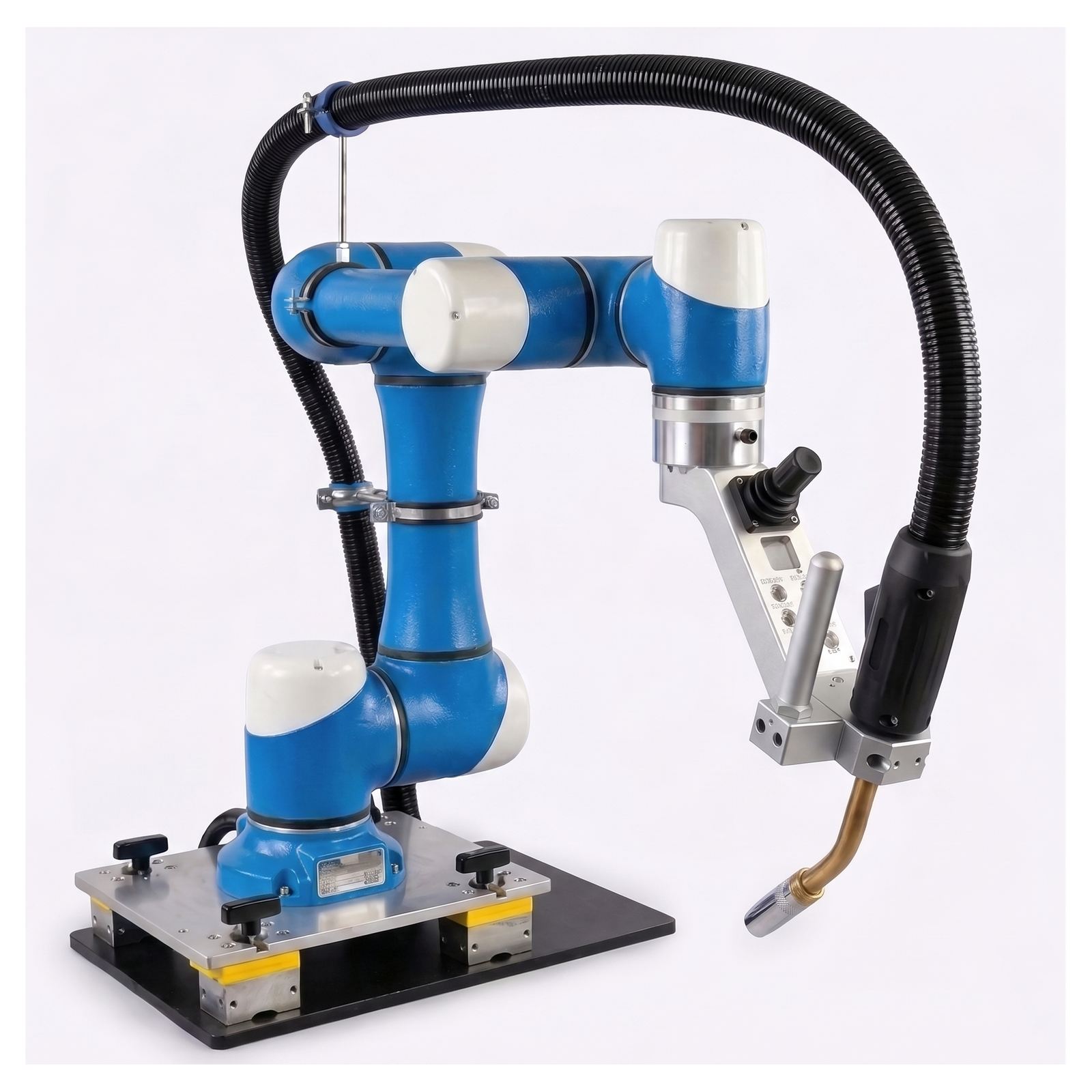
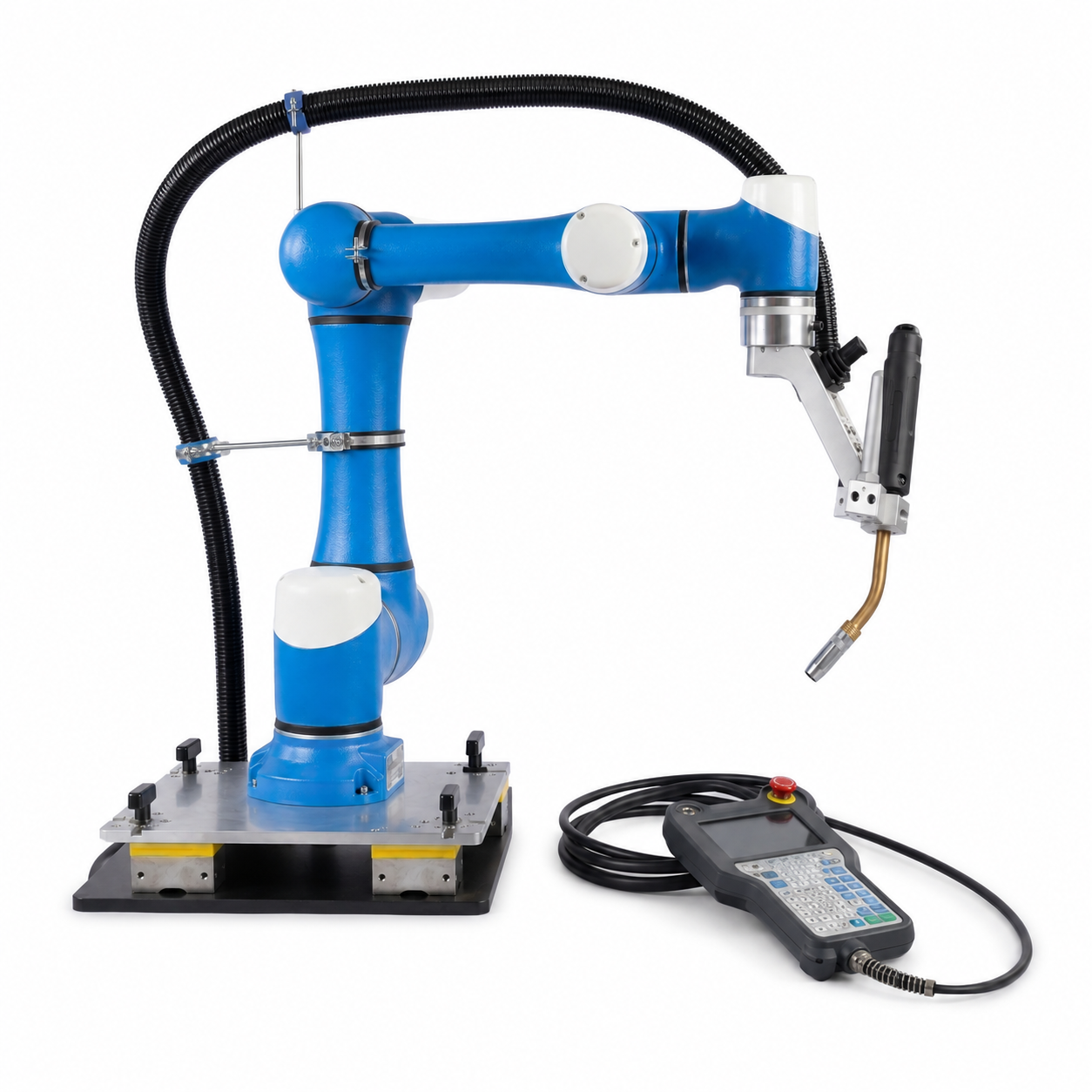
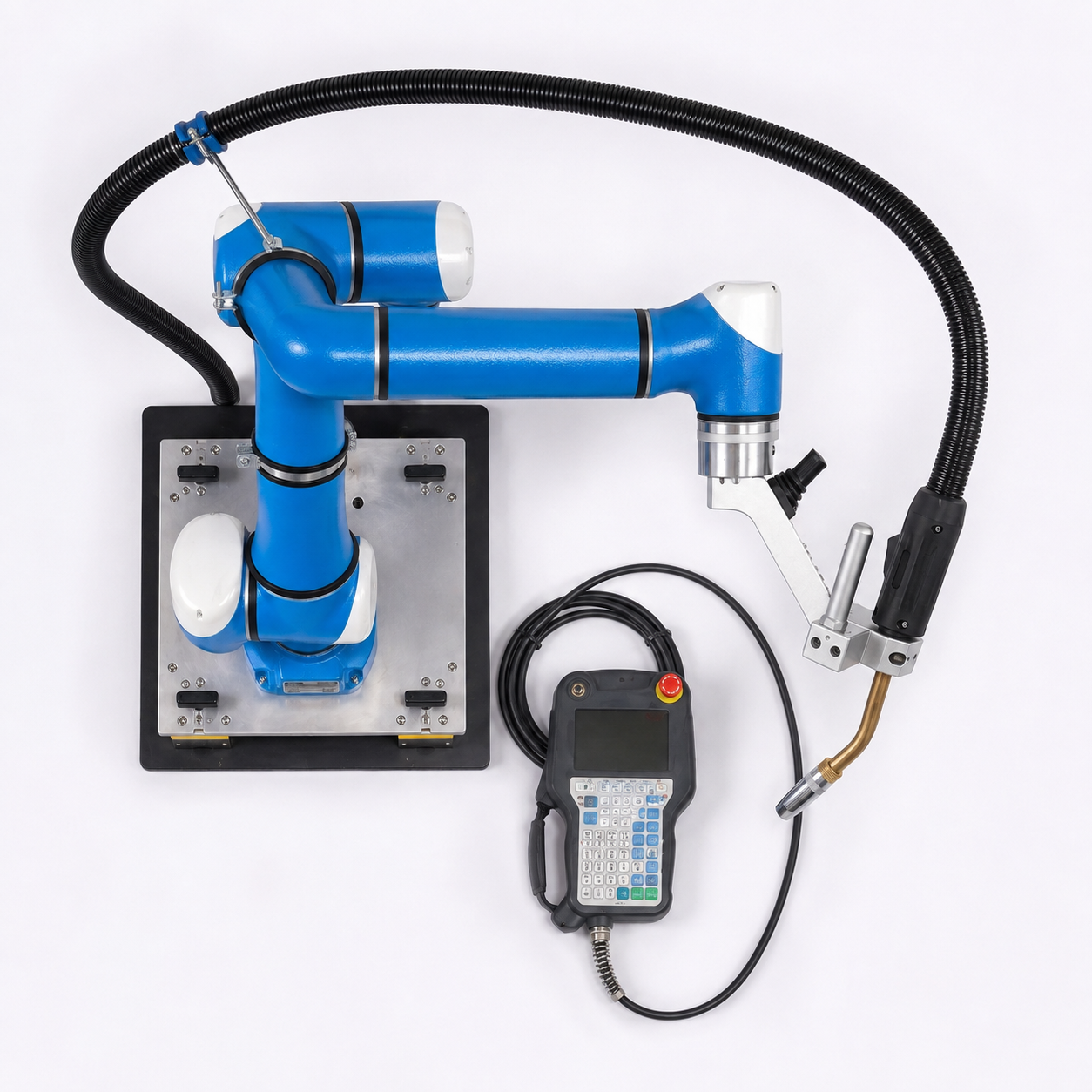
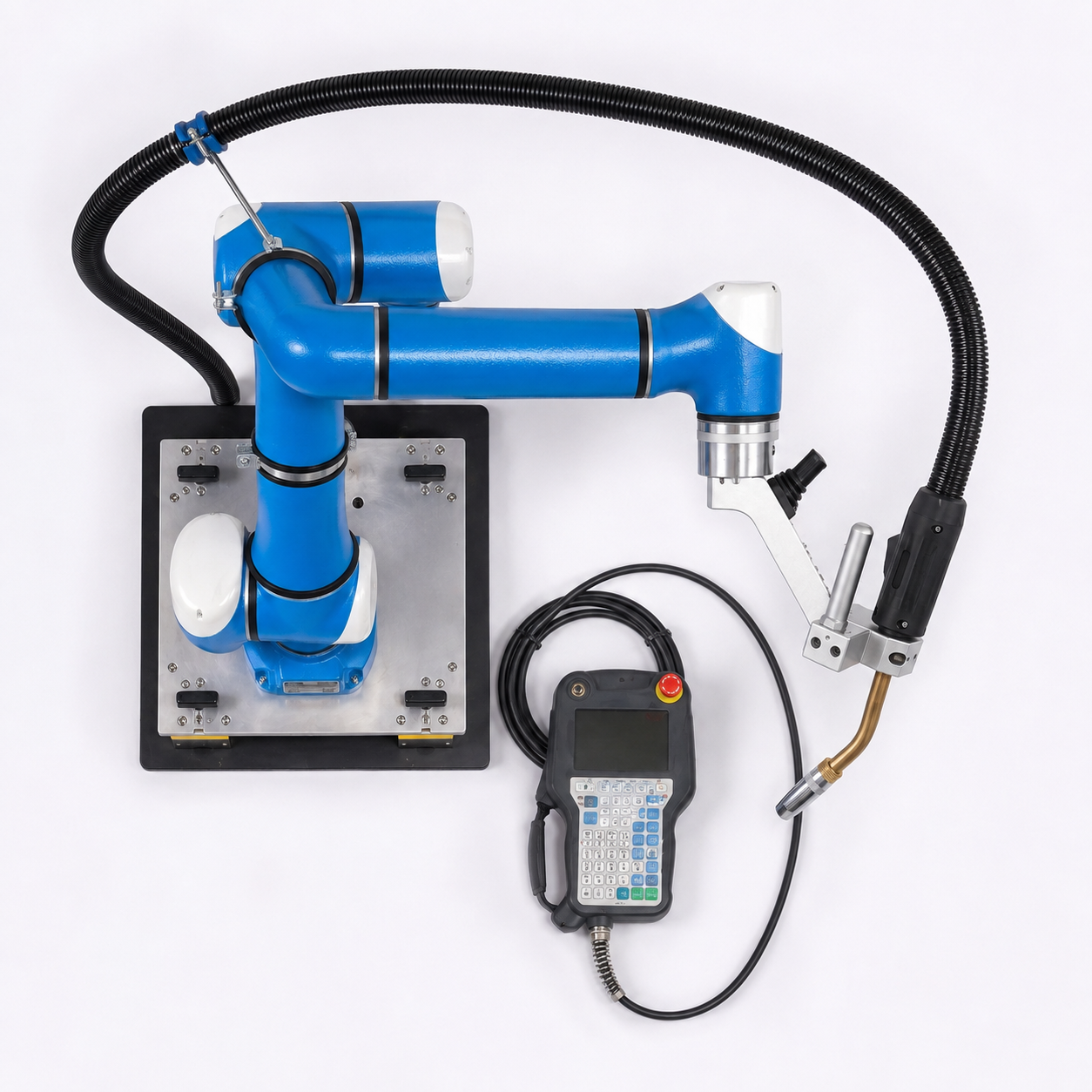
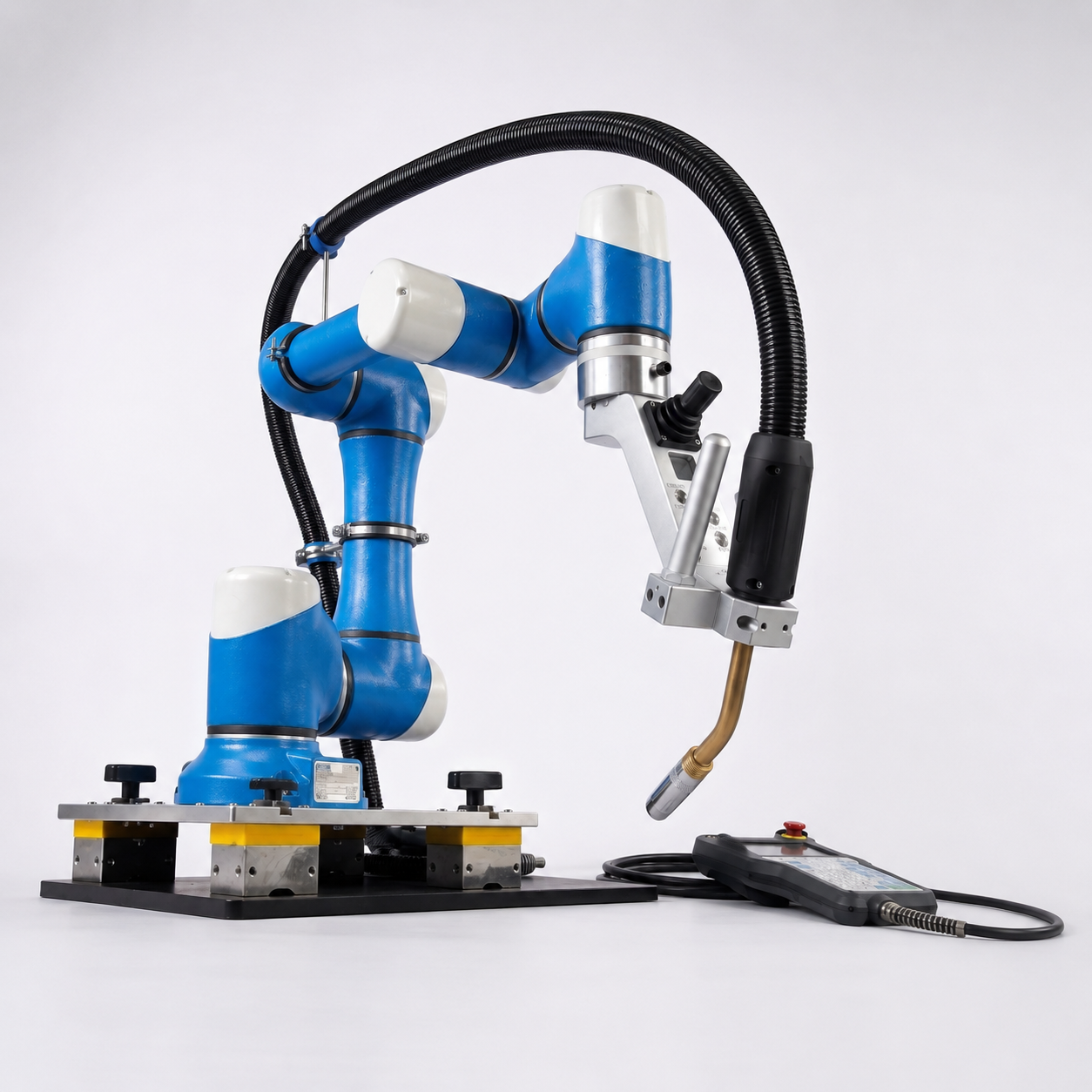
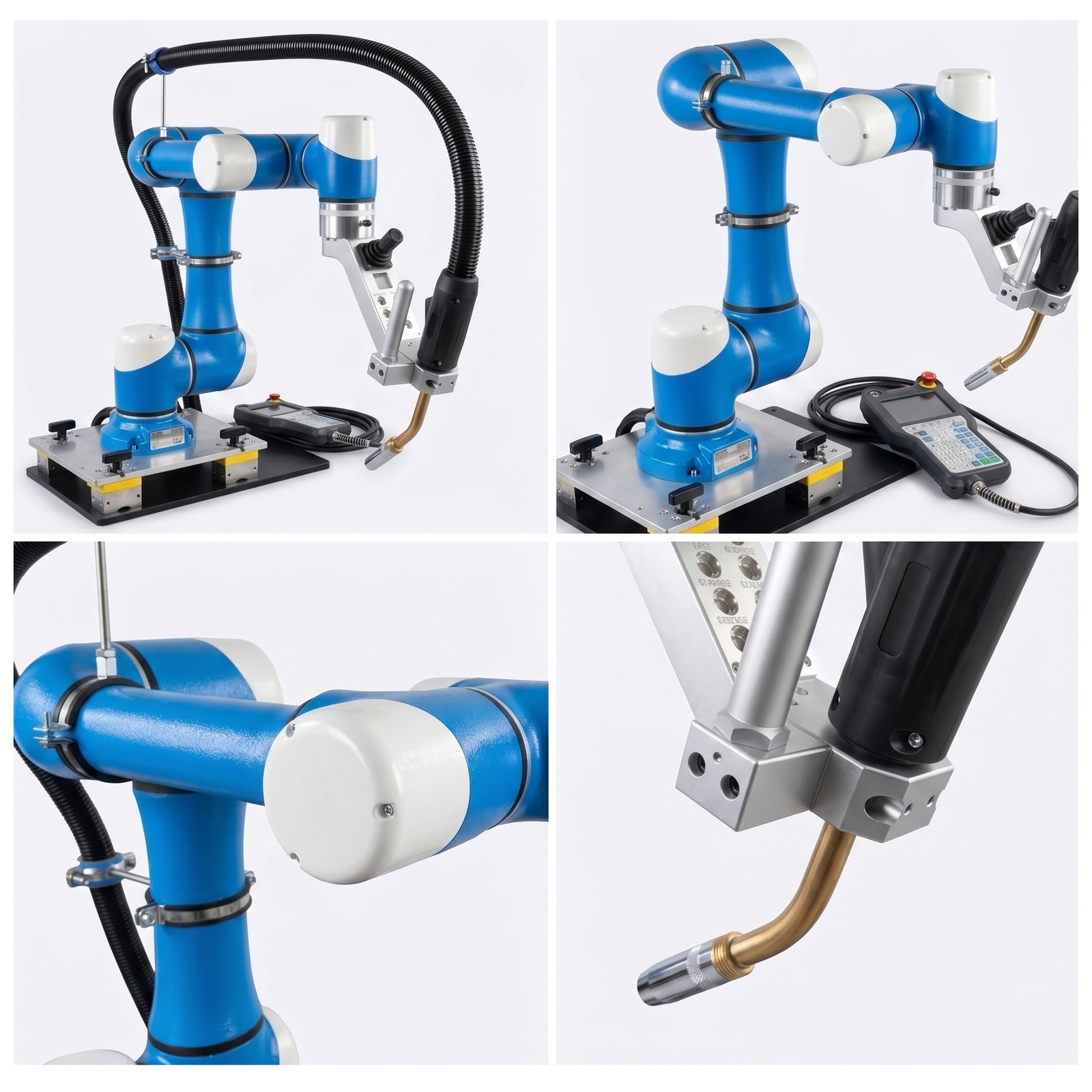
The ST-COW(B) is a six-axis collaborative robotic welding system designed to automate repeatable welding operations. It can be configured for fabrication workshops, manufacturing facilities, production lines, and customized robotic welding cells.
What does “six-axis” mean?
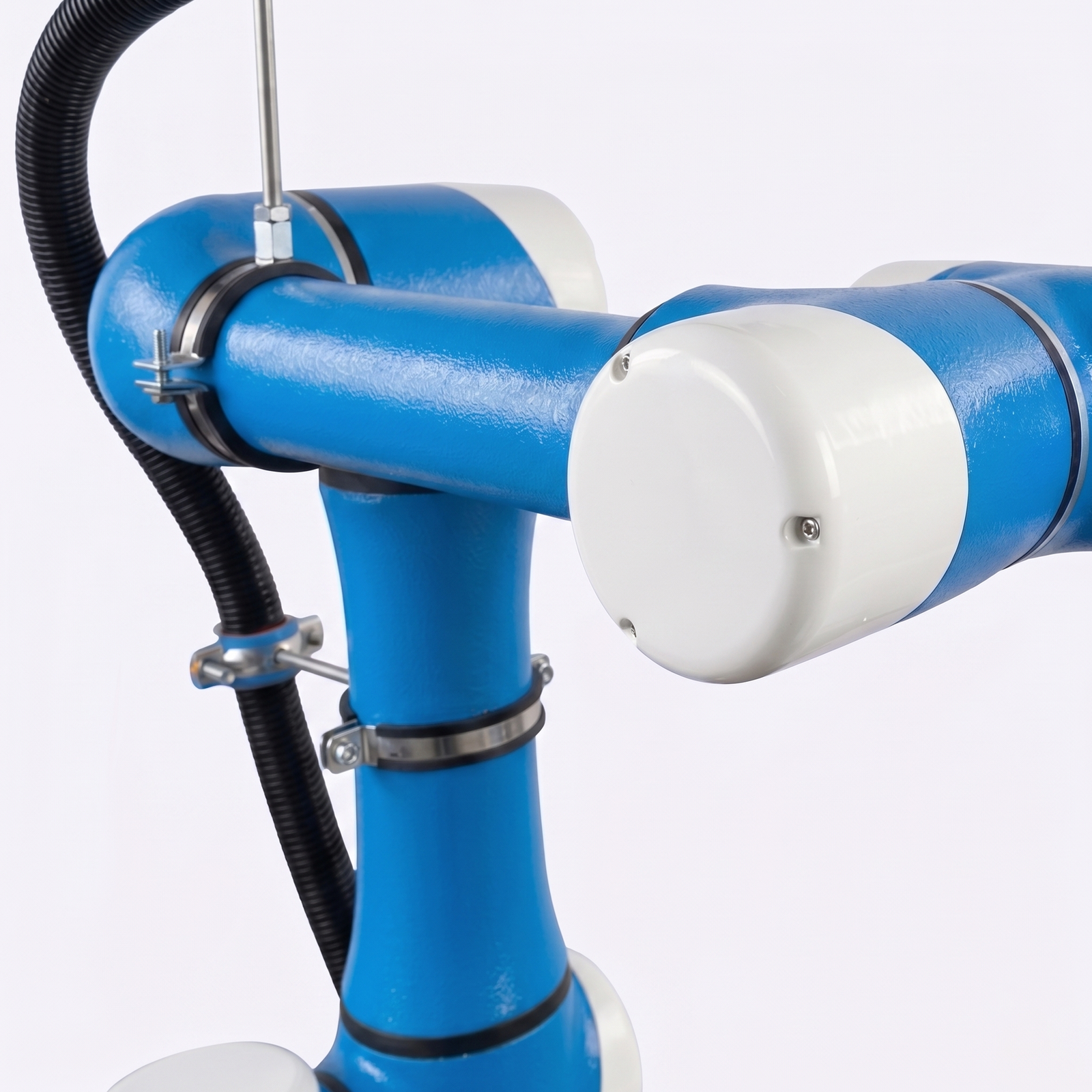
Six-axis movement allows the robotic arm to move and rotate through six independently controlled joints. This enables the welding torch to approach a workpiece from multiple positions and follow straight, curved, angled, and complex welding paths.
Which welding processes does it support?
Welding-process compatibility depends on the selected configuration. The system may be configured for processes such as MIG/MAG or TIG welding when equipped with the appropriate welding power source, torch, wire feeder, shielding-gas system, and software.
Can the robot weld carbon steel, stainless steel, and aluminum?
The system may be configured for carbon steel, stainless steel, aluminum, and other weldable metals. Final compatibility depends on the welding process, power source, filler material, shielding gas, material thickness, and selected equipment.
Is this robot completely automatic?
The ST-COW(B) can automatically perform programmed welding sequences. An operator is still required to prepare and position workpieces, select or create programs, inspect weld quality, maintain the equipment, and supervise production.
Does the operator need programming experience?
The system is designed to simplify programming through guided controls and welding-path teaching. Traditional line-by-line programming may not be required for basic operations, depending on the supplied controller and software. Operators must still receive equipment, welding, and safety training.
Can welding programs be saved and reused?
Yes. Properly configured systems can store programmed welding paths and process settings for recurring jobs. Saved programs help support consistent production when the same workpieces and fixtures are used.
Is the ST-COW(B) suitable for custom fabrication?
Yes. It may be suitable for customized and small-batch production when the application includes repeatable workpiece positioning and weld paths. New parts generally require new fixtures, programs, or process adjustments.
What products can the machine weld?
Common applications may include frames, brackets, cabinets, enclosures, automotive components, machinery parts, agricultural equipment, metal furniture, structural assemblies, and other repeatable fabricated components.
Does the system include the welding power source?
The included equipment depends on the package selected. A complete system may include the robot, controller, welding torch, power source, wire feeder, cables, software, workstation, and safety equipment. All components must be confirmed in the final quotation.
Does it include a welding table or positioner?
A welding table, rotary positioner, customized fixture, or multi-axis positioner may be included or offered as optional equipment. The appropriate workholding system will depend on the size, weight, geometry, and required movement of the workpiece.
What information is required before ordering?
Customers should provide:
• Workpiece drawings, photographs, or 3D models
• Base material and material thickness
• Joint type and required weld dimensions
• Preferred welding process
• Maximum workpiece size and weight
• Expected production volume
• Available electrical supply
• Installation location
• Required accessories and safety equipment
• Final delivery destination
Can the robot work safely beside employees?
Collaborative operation may be possible when the complete installation has been properly assessed and configured. A collaborative robot does not automatically make every welding application safe for unguarded operation.
Welding introduces hazards including heat, sparks, ultraviolet radiation, fumes, electrical energy, moving equipment, and hot workpieces. A documented risk assessment must determine whether guarding, scanners, welding curtains, ventilation, personal protective equipment, or other controls are required.
Does the system eliminate the need for safety barriers?
Not necessarily. Safeguarding requirements depend on the robot configuration, welding process, tooling, workpiece, operating speed, workspace, and applicable safety regulations. The final installation must be evaluated by qualified safety and integration personnel.
Is fume extraction included?
Fume extraction is configuration-dependent and may be offered separately. The customer must ensure that suitable ventilation and extraction equipment is installed for the welding process and materials being used.
How accurate is the robot?
Accuracy and repeatability depend on the selected robot configuration and verified manufacturer specifications. Welding results also depend on fixture accuracy, workpiece consistency, calibration, programming, torch condition, and process settings. Confirm the rated repeatability before purchase.
What payload and reach are available?
Payload and working reach must be confirmed for the final ST-COW(B) configuration. Customers should provide their workpiece dimensions and required weld locations so the appropriate robot and workstation can be selected.
Can the system be integrated into an existing production line?
Yes, depending on the existing equipment and control architecture. Integration may require customized fixtures, communication interfaces, safety controls, sensors, positioners, conveyors, or programming.
How long does installation take?
Installation time depends on the system configuration, facility readiness, electrical connections, welding equipment, tooling, safety requirements, and level of customization. A project-specific installation schedule will be provided after the application is reviewed.
Are installation and training available?
Installation, commissioning, programming support, and operator training may be available depending on the selected package and customer location. These services should be confirmed in the final quotation.
What maintenance does the system require?
Routine maintenance may include inspection of the robot, cables, welding torch, contact tips, wire-feeding equipment, cooling system, fixtures, sensors, and safety devices. Maintenance intervals must follow the manuals supplied with the robot and welding equipment.
Does the machine include a warranty?
Warranty coverage depends on the selected configuration, manufacturer, and purchase agreement. The warranty term, covered components, service procedure, and exclusions will be stated in the final quotation or sales contract.
How much does the system cost?
Pricing depends on the robot specifications, welding process, power source, torch, positioner, workholding, safety equipment, software, installation, training, shipping, and customization. Contact JLT for an application review and detailed quotation.
How long does delivery take?
Eligible stocked configurations may be delivered within approximately 3–12 business days. Customized, manufactured-to-order, or internationally shipped systems may require additional production, testing, documentation, customs-clearance, and transit time.
Will I receive tracking information?
Tracking or freight-shipment information will be provided when available after the order has been processed and dispatched. Large industrial systems may be delivered through a freight carrier rather than standard parcel service.
How can I request a quotation?
Submit the product requirements, workpiece information, production goals, delivery location, and requested accessories through the JLT platform or contact the JLT support team. A representative will review the application and provide the appropriate system configuration and quotation.